
September in Montpellier: the events you shouldn’t miss
Moving to a new city usually starts with the same question: where do I begin? In Montpellier, September answers it for you. In three weeks the city packs in music festivals, buildings that stay closed the rest of the year, and film premieres. It is the best month to get to know the place — and to meet people without having to try too hard. Here are five events we recommend, with the practical details you need to get there. 1. Beer Love Fest — grand finale at the Peyrou, 11 and 12 September Montpellier’s craft beer festival turns ten this year. After a week of events in partner bars across the metropolitan area, everything wraps up on the Promenade du Peyrou, one of the finest viewpoints in the city. Our tip: come on Saturday. Entry is free, the daytime atmosphere is family-friendly, and it is by far the easiest setting to start a conversation with the people next to you. 2. Festival Arabesques — until 20 September Now in its 21st edition, Arabesques brings the cultures of the Arab world into dialogue with the contemporary scene: world music, jazz, stand-up, exhibitions and talks, spread across the Opéra Comédie, the Domaine d’O and the Halle Tropisme. Don’t skip La Médina, the festival’s social space, with homemade gazelle horns, makrouts, snowballs, cigares and Moroccan pancakes. Open Thursday and Friday from 6.30pm, Saturday 2pm to midnight, Sunday 2pm to 11pm. 3. European Heritage Days — 19 and 20 September This is the weekend Montpellier opens the doors that stay shut all year. The city of private mansions unlocks several of them, and this year devotes one of the densest programmes in the country to photography. Rarely open: the medieval mikveh on rue de la Barralerie, a 12th-century Jewish ritual bath and one of the best preserved in Europe; the Hôtel de Grave and Hôtel de Villarmois; the Hôtel d’Aurès and the garden of the former bishop’s palace; the Hérault prefecture; the Costumotek and its stock of over ten thousand costumes; the Droguier of the pharmacy faculty; and Pierresvives, the Zaha Hadid building. The classics: eight sessions at the Musée Fabre including “Design according to Pierre Paulin”, five at the Opéra Comédie with backstage access, the Bonnier de la Mosson estate and its pocket concerts, and Saint-Pierre cathedral with its Urbain V tower and organ. With kids: a family visit for ages 6–10, “The painter and his materials”, at the Musée Fabre, “Contes en vadrouille” story readings, and the “Agence NO-FUTUR” workshop. The two 2026 themes: photographic heritage, centred on Pierresvives with the Hérault departmental archives (including a cyanotype workshop), and heritage at risk, with the secrets of restored artworks at the Musée Fabre. Good to know: several visits require booking. Check the conditions on each listing and book early — slots go fast. 4. Les Internationales de la Guitare — from 20 September The festival takes over as the Heritage Days end and runs through to 18 October. Its promise: an eclectic, demanding programme in which the guitar is the thread running between very different genres — classical, jazz, contemporary and world music. 5. Cinemed — the premieres start in September The Mediterranean Film Festival runs from 16 to 24 October for its 48th edition, with a poster paying tribute to Spanish director Pablo Berger and Camélia Jordana among the guests. Expect more than 200 screenings, filmmaker Q&As and cultural events. Tickets for the premieres and festival passes are already on sale. The first screening is on Thursday 17 September at the Médiathèque Émile Zola with Nabil Ayouch’s Everybody Loves Touda, followed by L’Affaire Marie-Claire on Saturday 17 October and En haut de la pile on Monday 19 October, both at the Corum. Website: cinemed.tm.fr The real challenge: not going alone Finding a festival is easy. Going when you don’t know anyone is a different matter — and it is usually what separates “I saw a concert” from “I had a great night”. At New Here we organise outings and meetups so you can discover Montpellier as part of a group, from your very first weeks here. Join our next event Browse the upcoming New Here outings and book your spot. You’ll leave with new places to go back to, familiar faces and the start of a local network. See upcoming events
July 13 and 14 in Montpellier: What to Expect (and What’s New This Year)

You’ve just arrived in Montpellier and are wondering what a Languedoc-style Bastille Day is like? Good news—the city doesn’t hold back: two days of ceremonies, music, and public gatherings await you. Just a quick note before you head out: this 2026 edition has a surprise in store—and not the most pleasant one. The fireworks display won’t take place—and it’s not just in MontpellierLet’s start with the game-changing news. The Hérault Prefecture has banned all fireworks displays throughout the department between July 10 and 16, with the exception of the coastline. The reasons: a persistent drought, numerous reported fire outbreaks in recent days, and a fire still burning near Carlencas that has the SDIS 34 firefighters fully mobilized. As a result, Montpellier has canceled its July 14 fireworks display, and the traditional firefighters’ ball has also been called off to ensure emergency responders remain available if needed. If you’ve just arrived in the region, keep this in mind: in the South, summer often means being on high alert for fires, and festival schedules can change at the last minute. The best bet is always to check the website of the city hall or the relevant municipality just before heading out. But that doesn’t mean the festivities are canceled Rest assured, Montpellier hasn’t put the decorations away. The city has maintained a rich, free program designed to bring people together. As a side note, the official poster for this year’s event was designed by Igor Gurovich, a Russian graphic designer in political exile, and was unveiled during an exhibition at the La Fenêtre art center. What if you still want to see a real fireworks display? Many towns around Montpellier haven’t had to cancel theirs (decisions vary from town to town depending on the local risk level, so it’s best to check before heading out). Here are a few options within 30 minutes: Pérols: a big fireworks display at the Parcours de Santé around 10:30 p.m., preceded by a ceremony, an “abrivado,” and a pétanque tournament in the afternoon.Lavérune: a guinguette-style dinner at the château, followed by a dance with the Mission2 orchestra.Saint-Jean-de-Védas: evening festivities and fireworks at Parc de la Peyrière.Once again, these schedules may change from one day to the next depending on the fire risk, so it wouldn’t hurt to check the town’s website before heading out. New Here’s Tip If this is your first July 14th in France, the best time to go is undoubtedly the evening of the 13th at the Peyrou: fewer crowds than the next day, beautiful lighting, and a chance to experience a quintessentially French tradition without the hustle and bustle. Bring some snacks, plan to find a place to sit (the grassy areas fill up fast), and above all, let yourself get swept up in the atmosphere: hearing “La Marseillaise” sung in unison by hundreds of people is worth the trip, fireworks or not. Check the websites of the relevant city halls for all the latest updates, as schedules are subject to change depending on weather conditions.
This Weekend in Montpellier: Brass Bands, Pop-Up Architecture and Sustainable Fashion
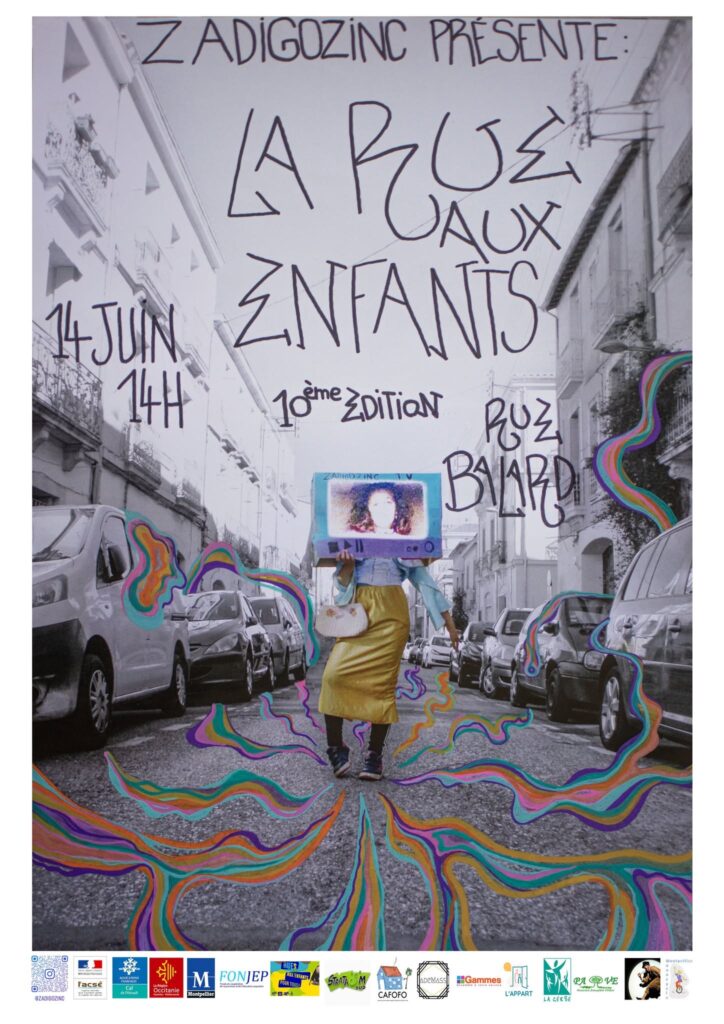
June 12, 13 and 14, 2026 If you’ve just arrived in Montpellier, this is one of the best weekends of the year to understand what makes this city tick. Free festivals, streets handed over to pedestrians, private courtyards opened to the public — the perfect opportunity to explore neighbourhoods you don’t know yet and meet your future neighbours. Friday, June 12 — The Party Begins Guinguette #1 du Récif × Festival des Fanfares 6pm to 11pm — Parc Clemenceau (22 avenue Georges Clemenceau) — Free Le Récif, a community café in the Gambetta-Clemenceau neighbourhood, opens its guinguette season with an evening dedicated to brass bands: a performance by Cie Concordance at 7pm, followed by three brass bands taking the stage from 8pm. All evening long: wooden games, a village of local associations, plus food and drinks on site. A guinguette is a French open-air gathering with music, food and dancing — and this is exactly the kind of neighbourhood event you can show up to alone and leave with new friends. Family-friendly and open to everyone. Getting there: tram 3 (Saint-Denis stop), tram 4 (Observatoire stop), or a 15-minute walk from Saint-Roch station. Worth knowing: the Festival des Fanfares opens the same evening in other neighbourhoods (Arceaux, Port Marianne, Sainte-Anne) and in Clapiers, Castelnau-le-Lez and Saint-Georges-d’Orques. Giant Brasucade Evening — Halle Tropisme (121 rue de Fontcouverte) What’s a brasucade? It’s a culinary tradition from the Occitan coast, born around the Thau lagoon between Sète and Mèze: mussels grilled outdoors — traditionally over vine-shoot embers — then doused in a marinade of olive oil, garlic and herbs. More than a recipe, it’s a ritual of togetherness: you eat standing up, you share, you chat. If you want to taste local food culture in its most authentic and simple form, this is the place. Getting there: tram 5, Cité Créative area. All Weekend — Festival des Architectures Vives (until Sunday 14) 9am to 7pm — Historic centre (Écusson) — Free The FAV celebrates its 20th edition on the theme of Transmission. The concept: temporary contemporary architecture installations set in the courtyards of the Écusson’s private mansions, normally closed to the public. It’s one of the rare chances all year to step through those doors — and an original way to explore a historic centre that even some long-time locals don’t fully know. Practical tip: start at the welcome pavilion at 32 Grand Rue Jean Moulin to pick up the programme and circuit map. Getting there: a 10-minute walk from Saint-Roch station; trams 1, 2, 3 and 4. Saturday, June 13 — The Big Brass Band Day 29th Festival des Fanfares de Montpellier Beaux-Arts and Boutonnet neighbourhoods — Free One of the city’s most iconic events: 20 brass bands from France, Texas, the Netherlands and Argentina, gathered under the theme “Fanfares en Hors Beat” (off-beat brass bands). The schedule: Entire streets turn into dance floors — the event draws around 20,000 people each year. No tickets, no booking: just drift from one stage to the next. Getting there: tram 1 or 2 (Corum stop), then a few minutes on foot. Take the tram — parking is extremely difficult on festival nights. Festival Montpellier Nouvelle Mode Saturday 11am-8pm and Sunday — Halle Tropisme — Free entry Run by Recycl’Occ Textile, this sustainable fashion festival brings together committed brands, upcycling designers, second-hand stalls, creative workshops, a fashion show and a clothes swap. A great spot to refresh your wardrobe without resorting to fast fashion — and to discover the Halle Tropisme, a cultural hub at the heart of the Cité Créative. Sunday, June 14 — Family Day and Festive Finale La Rue aux Enfants — 10th Edition From 2pm — Rue Balard — Free The Zadigozinc association closes Rue Balard to cars and hands it over to children: creative workshops, games, music, sport, a kids’ flea market and refreshments. If you’ve moved to Montpellier with your family, this is the weekend’s must-attend. Latin Hall × Nuit Brune 5pm to 11pm — Halle Tropisme — Last day of the Nouvelle Mode festival on site To close the weekend in style: workshops, live music and DJ sets celebrating Latin music — reggaeton, salsa, cumbia, dembow. A great gateway into Montpellier’s particularly vibrant Latino scene. Our Tip for Making the Most of the Weekend All of these events are free and require no booking. The golden rule: leave the car behind. The centre, Beaux-Arts and the Cité Créative get saturated on festival days — the tram network serves every venue. Times and line-ups may change: check the organisers’ websites before heading out. Just arrived in Montpellier? New Here helps you turn your new city into your home: practical guides, events and a community of fellow newcomers are waiting for you on our platform. This weekend is the perfect moment to take the first step.
Paying Too Much Rent in Montpellier? Here’s How to Check in 5 Minutes
You’ve just moved to Montpellier, or you’re about to sign a lease. One simple question deserves a clear answer: is the rent you’re being asked to pay actually legal? Since 2022, Montpellier has had rent control in place. This means a landlord can’t charge whatever they want: for most homes, there is a legal ceiling. If your rent exceeds it, you can ask for a reduction — and recover what you overpaid. Here’s what you need to know, and how to check your situation in just a few minutes. Does this apply to you? Rent control applies if your home meets these conditions: If you tick these boxes, read on: a ceiling applies to your rent. How does the ceiling work? Each year, the Préfecture sets reference rents expressed in euros per square metre. The amount depends on four criteria: The figure that matters to you is the increased reference rent (loyer de référence majoré): this is the maximum your landlord can charge when you move in. To find it, you multiply this per-square-metre ceiling by your home’s living area (surface habitable). A simple example: for a 50 m² home with a ceiling of €14/m², the maximum rent excluding charges would be €700 per month. The exact figures change depending on your address and your home — which is why the best approach is to check them directly (see below). The exception to know about: the rent supplement In certain cases, a landlord can charge a rent supplement (complément de loyer) that exceeds the ceiling. This is only allowed if the home has exceptional comfort or location features compared to similar homes in the same sector. This supplement, and its justification, must be written into the lease. A key point to protect yourself: the law forbids any rent supplement if the home has one of these defects: In other words: if you’re presented with a rent supplement while your home has one of these defects, it is not valid. Check your rent: the official tool from the Métropole The Montpellier Métropole provides a free simulator. You enter your address and your home’s characteristics, and the tool tells you the applicable ceiling. You then compare it with what you’re paying. This is the official source, kept up to date with the current decree — far more reliable than any estimate. ➡️ Check your rent here: Official simulator from Montpellier Métropole The simulator guides you through four steps: address verification, an introduction to the scheme, entering your precise address, and then your home’s characteristics. The tool is in French — if you need help understanding it, the ADIL 34 (see below) can assist you in person. Your rent exceeds the ceiling? You have options If the check shows your rent is too high, you are not powerless: Sample letters in French : Sample Letter: Challenging the Initial Rent AmountSample Letter: Challenging the Rent IncreaseSample Letter: Requesting a Rent Reduction Upon Lease Renewal Watch the timing: the deadlines to contest are short (generally three months from the date the lease is signed). Don’t wait. For free, personalised guidance, the ADIL 34 (the departmental housing information agency) answers your questions and helps you through the process — including in situations where the language barrier makes things harder. In summary Checking your rent takes only a few minutes and could save you hundreds of euros a year. You have the right to know whether your rent is fair — and to act if it isn’t. Start with the check: go to the official simulator. This article is provided for general information and does not constitute legal advice. For an analysis of your specific situation, contact the ADIL 34 or the services of the Montpellier Métropole.
5 ideas of things to do this beautiful Weekend !

Here are a few ideas of things to do this weekend! Saturday 23rd of May 1 – New Here Walk of the City Center- Free – If you’re New Here in Montpellier this 2 hours long city center Walk is one of the best ways to know more about the city, the recent evolutions it has gone through and where it is heading in the future. Sign-up here 2- Spend the evening at the Musée Fabre – Free – Museums open their doors at nightfall as part of the 22nd edition of European Museum Night. It’s a chance to explore the current exhibitions in the department’s museums, as well as to take part in treasure hunts, humorous tours, mystery investigations, and even concerts amidst the collections. Full program at nuitdesmusees.culture.gouv.fr 3- Nature Festival in Villeneuve-lès-Maguelone – Free – Villeneuve-lès-Maguelone is celebrating the 20th edition of the Nature Festival over five days, featuring walks in search of frogs, otters, and birds, as well as bike rides, performances, children’s readings, and lectures on the region’s biodiversity… More information on : villeneuvelesmaguelone.fr Sunday 24th of May 4 – Picnic and Oysters in Sète – Free – Conch’Party: a potluck picnic on the shores of the Thau Lagoon, featuring complimentary oysters and workshops on oyster farming, in support of local producers. More information: archipel-thau.com 5- Visit one of the 13 Flea Markets happening all over the Montpellier Metropolitan region – Free – Check out our table for more information on these : https://airtable.com/appIHiiAJCvgtHGQh/shr7HYxauIEVJWLbE
Montpellier Has Its Own Currency. Here’s Why It Matters.
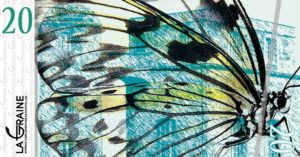
Walk through the historic center of any European city today and you’ll see the same pattern: shuttered storefronts, “À vendre” signs in the windows, independent shops being replaced by chains — or by nothing at all. Rising rents, online competition, energy costs, shifting consumer habits. Small businesses in Europe’s city centers are facing an existential squeeze, and Montpellier is no exception. But in Montpellier, and in other regions of France something interesting has been happening. In July 31 2014, a law on the social and solidarity economy (SSE) established a legal framework recognizing local complementary currencies (LCCs) as legal tender in France. Since than around 80 of these currencies have been officially recognized in France, and each have their specific geographic delimitation. What Is La Graine? La Graine is a citizen-run local currency, complementary to the euro. Created in 2018 after five years of grassroots work, it now circulates across Montpellier and the wider Hérault département. The rules are simple: But the real story isn’t the currency itself. It’s what stands behind it. Why a Local Currency Exists La Graine isn’t a quirky alternative to the euro. It’s a deliberate tool to reshape how money flows in the region. When you spend a euro at a chain store, most of that money leaves Montpellier within hours — heading to corporate headquarters, often abroad. When you spend a Graine, it stays. It circulates among local businesses, local producers, local employees. Studies on similar local currencies in France show that each unit can circulate several times before being exchanged back, multiplying its local economic impact. The currency is governed democratically. Decisions are made in general assemblies. The board rotates regularly. There are no shareholders — only members. And every business in the network signs a charter: commitment to local sourcing, ecological practices, fair labour conditions, and human-scale economics. In other words, the businesses that accept La Graine have already been vetted for the values they uphold. Their use means that the euros exchanged by members are held in a guarantee fund deposited with an ethical banking partner which prevents speculation. Another good reason to adopt La Graine, is that it has partnered with la NEF, a national ethical cooperative bank, that has pledged to double the total amount citizens invest in Graine yearly to support local businesses. Why It’s Especially Useful for Newcomers If you’ve just moved to Montpellier, La Graine solves a problem you may not even know you have yet: how to find businesses that match your values, without spending months trial-and-erroring. Here’s what La Graine gives you that Google Maps doesn’t: The Bigger Picture You don’t need to convert your whole salary into Graines. Even a small amount — 20 or 50 Graines a month — is enough to start exploring. Think of it less as a financial decision and more as a discovery pass for the real Montpellier. When we built New Here, we asked ourselves: what’s the fastest way for someone new to feel emotionally connected to their city? Tools like La Graine are part of the answer. They turn anonymous transactions into local relationships. La Graine can also be a great vehicle for newcomers who want to “give back” to their communities. Beyond spending your money with a currency that supports the local economy, you can also get involved in the association la Graine34 and help grow the number of people and local businesses who use la graine in Montpellier but also everywhere in the Hérault region. How to Get Started Become a member. An annual membership (a few euros) gives you full access to the network and supports the association’s running costs. Find your nearest exchange counter. There are 4 counters in Montpellier and several more across the Hérault (Castries, Le Crès, Mèze, Sète, and beyond). The full list is on lagraine34.org. Exchange your euros for Graines. 1-for-1. No fees. Download Appli’Graine34 Play Store / App Store More information on : 🌱 La Graine website: lagraine34.org